Trump Threatens to 'Annihilate' Iran as Some Republicans Break Over War's Cost
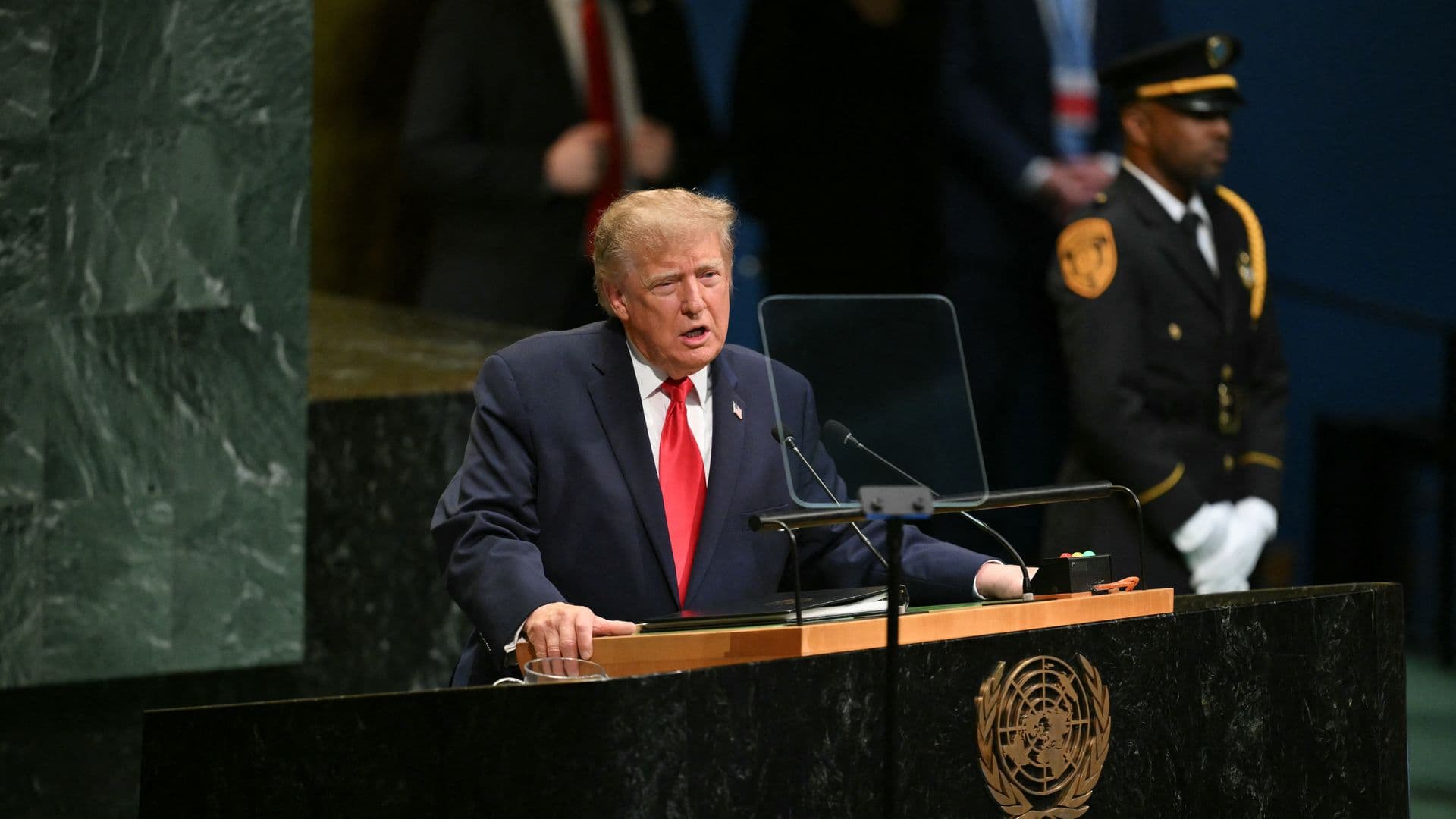
AN UNUSUAL THREAT FROM THE UN PODIUM
President Donald Trump threatened Tuesday to "annihilate" Iran if he cannot reach a peace deal, a historically unusual bit of saber-rattling delivered from the UN General Assembly podium. The threat came during a packed week of US foreign policy that included talks with leaders of Britain, France, Japan, Ukraine and Venezuela, with a state dinner for Chinese leader Xi Jinping as the week's centerpiece. But as Trump tries to set the national agenda on the world stage, the past few days have brought reminders that American politicians ultimately process world affairs through a basic lens: how it hits voters' wallets.
A growing number of Republican candidates are breaking with the president and explicitly connecting the Iran war to the soaring price of diesel at the pump, with some who previously backed the campaign now saying it's time for the conflict to end.
ROGERS AND HINSON SHIFT THEIR TONE
Mike Rogers, the Republican Senate nominee from Michigan and a former House Intelligence Committee chairman who has been hawkish on Iran for years, told a local TV interviewer just months ago that the war was "a win-win-win for us" while wanting a "quick conclusion." On Monday, though, Rogers posted a video bluntly declaring: "The war with Iran needs to end - and end quickly. When it does, energy costs will plummet." He called for a temporary ban on American diesel exports, without directly naming or criticizing Trump, but drawing a straight line between the war and higher consumer costs marked a sharp break with the White House.
Rep. Ashley Hinson, an Iowa Republican running for Senate who voted repeatedly this year against House measures to end the conflict, struck a similar note Monday: "Iowans are being squeezed and shouldn't have to foot the bill at the pump or the checkout line for the war in Iran. We need to use every option at our disposal to provide some relief from high prices." Like Rogers, she called for restrictions on diesel exports and other economic responses. Notably, both are blaming the Iran war for high fuel prices, something Trump has explicitly rejected, instead pointing to Ukrainian strikes on Russian energy facilities as the driver of costs.
A BROADER SHIFT, DRIVEN BY THE MIDTERMS
Though there have been no mass defections on Iran within the Republican congressional caucus, skepticism of the war appears to be growing on the GOP side, enough to help pass a resolution calling on Trump to end the conflict. Rep. Zach Nunn, another Iowa Republican in a competitive district who had voted against previous resolutions to end the war, said: "Having deployed multiple times and flown over 700 combat hours in the Middle East, I will not support another open-ended war. We can defend Americans, pressure Iran and pursue peace while ensuring Congress fulfills its constitutional responsibility."
Much of this reflects Republican candidates in competitive districts seeking distance from a deeply unpopular president waging a deeply unpopular war, amid concern that Democrats could retake at least the House in the midterms. A recent NBC poll found 62% of Americans say the war has not been worth it, and 57% said they would be less likely to vote for a candidate who supports it, numbers that suggest further Republican defections are possible in the weeks before the election.
WHY IT MATTERS
Trump can still point to diplomatic wins this week, including his high-profile meeting with Xi Jinping, but the growing Republican unease over Iran shows that in a midterm election year, the political cost of the war is being measured less in Washington policy debates and more, as U.S. News put it, "at the bottom of your gas station receipt."
Source: U.S. News & World Report