US and Iran Trade Blame Over Tanker Attack in Hormuz as Indian Sailor Remains Missing
THE ATTACK
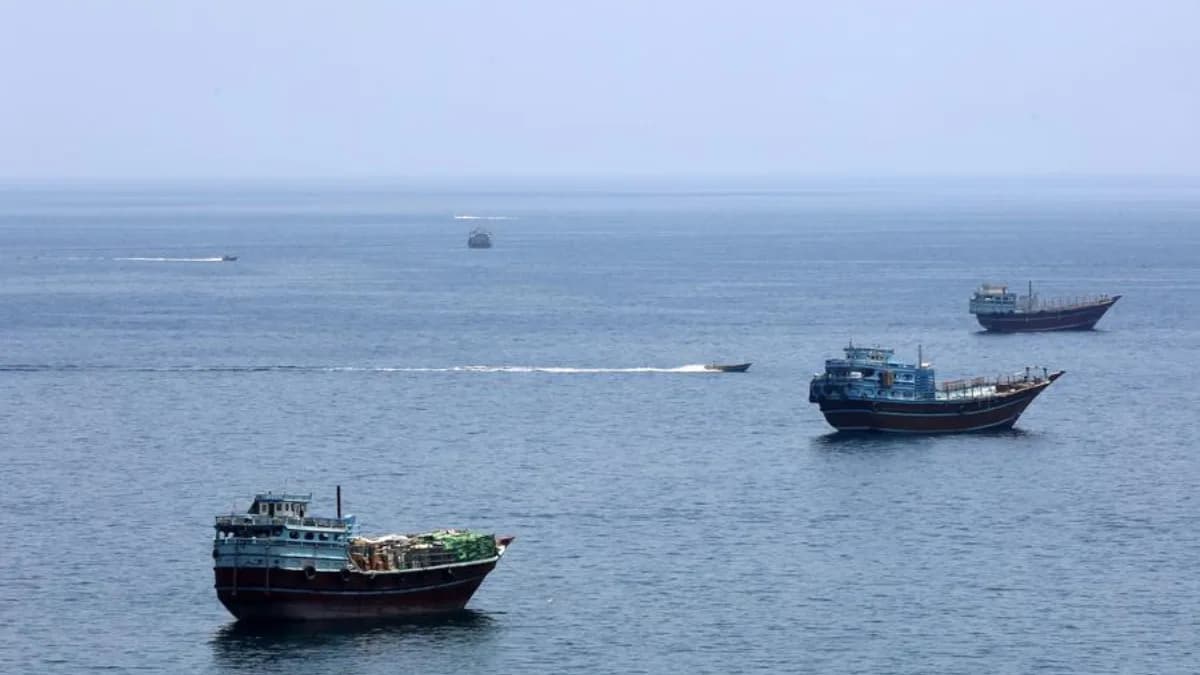
The oil tanker MT El Gaia caught fire and was left drifting in waters off the coast of Oman over the weekend, the latest incident along the shipping lanes that carry roughly a fifth of the world's seaborne oil through the Strait of Hormuz. The Panama-flagged vessel had 14 Indian crew members aboard. Thirteen were rescued by local authorities. A search and rescue operation for the fourteenth sailor was still underway as of Monday, coordinated by Omani authorities and the Indian embassy in Muscat.
TWO VERSIONS OF WHAT HAPPENED
Iran and the United States gave conflicting public accounts within hours of each other. Iran's Islamic Revolutionary Guard Corps said through state media that El Gaia struck a naval mine after sailing through a restricted southern route of the strait that Tehran had mined.
US Central Command called that account false. In a statement posted to its official account, CENTCOM said El Gaia "was struck by an Iranian missile last month and rendered inoperable" and that "this weekend, Iran struck the tanker again with a drone while the ship sat in waters off the coast of Oman."
"The IRGC's false claim is yet another example of their lies and intimidation attempts while they try to impede commercial vessels in the strait," CENTCOM said.
CENTCOM added that the tanker is now being towed by a regional partner, though it has not said to where. Neither government's account has been independently verified by a third party, and what actually caused the fire remains disputed days later.
THE MISSING SAILOR
For India, the immediate concern is the sailor still unaccounted for, not the argument over who is telling the truth. India's Ministry of External Affairs said in a statement:
"We condemn the attack on the commercial vessel MT El Gaia off the coast of Oman earlier today. Of the 14 Indian crew onboard, 13 Indians have been rescued so far. Search and Rescue operations for the missing Indian national are continuing," the ministry said.
The MEA framed the attack as part of a wider pattern it wants stopped. "The targeting of commercial shipping, seafarers, civilians, and civilian infrastructure in the region is unacceptable," it said, repeating its call for immediate de-escalation and a return to dialogue and diplomacy.
A REGION ALREADY ON EDGE
El Gaia was not hit in isolation. The same weekend, Houthi forces in Yemen fired dozens of missiles and drones at a Saudi military airbase in Khamis Mushait and struck at the kingdom's energy infrastructure, including the Ras Tanura refinery. Saudi Arabia shut down its East-West pipeline in response, and oil prices jumped on the news, with Brent crude climbing almost 5 percent toward $110 a barrel, a nearly four month high.
Days earlier, leaders gathered in New Delhi for the BRICS summit spent hours negotiating language on the Middle East before their declaration called for "maximum restraint" to prevent a wider regional war, a debate people close to the talks described as the hardest sticking point of the entire summit. Whether El Gaia's damage came from a mine Tehran laid or the missile and drone Washington describes, the argument over its cause is itself a symptom of how contested these waters have become. A shipping lane carrying a fifth of the world's oil, where Washington and Tehran cannot agree on what hit a single tanker even after the fact, is not a reassuring picture for the vessels still queued up to cross it.
WHAT'S NEXT
Search and rescue teams remain on the water off Oman looking for the missing crew member. CENTCOM says El Gaia is being towed to safety, but its ultimate fate, and any independent confirmation of what actually struck it, is still unresolved. With oil markets already reacting to attacks elsewhere in the region this week, the incident looks likely to keep feeding a broader argument over how close the Gulf is to a wider conflict, not just what happened to one ship.
Source: The Statesman